
The good thing about reaching the age I’m currently at is that I am no longer shy about admitting shopping ranks amongst my top three hobbies (I’m still too coy to tell you at which spot but follow me here a bit and you might get a sense), but this means that, no matter how big my closet is, I constantly need to curate and organise my wardrobe. And trust me, the closet in our current home is very big… still, curating and organising goes on every few months to avoid hoarding pieces that I don’t use and not seeing the beautiful stuff for all the mess.
I have never used a closet tidying service, where someone magically drops into your house to organise everything from shoes to earrings, mainly because I regard this type of out-sourcing as a little lazy and indulgent. Instead, I keep a rather loose routine alternating between the odd tidy-up whenever somethings look slightly out of place, and the more radical culling exercise where every part of my closet gets a very close review and dozens of pieces are discarded.
Tip One – If you can, create a space that fits your needs
Having a walk-in closet is a luxury that is not available to everyone, but for me this has changed my life. In London, I had designed every corner of my walk-in myself and my favourite feature was the open shoe shelves, although it also taught me that open closets are dust magnets…
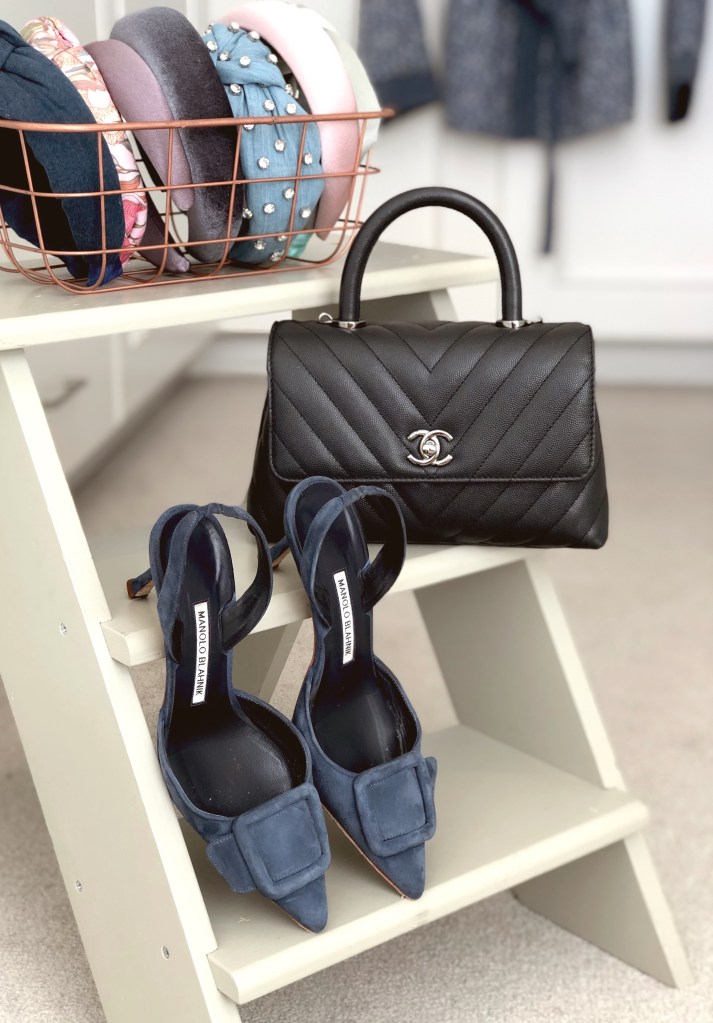
Since moving to South Africa, I’ve made the best of what I have: a huge space, but a very uninspiring closet at first with hanging spaces that were too high (unless you’re a basketball player, but then what would you hang? Shorts?) and there are no small drawers, only very large ones that can get too heavy if over-filled, but I have a lot of shelving, so I got to work. By this I mean I found a carpenter who implemented my vision of course, adding shelves, lowering hanging rails, and replacing some of the shelves, which are quite deep, with pull-out shelves to store my shoes. I keep a mini step-ladder to reach the higher shelves where my bags are kept, and I have a few storage boxes to organise things like swimwear, socks, lingerie, etc.
Tip Two – Store your pieces by category
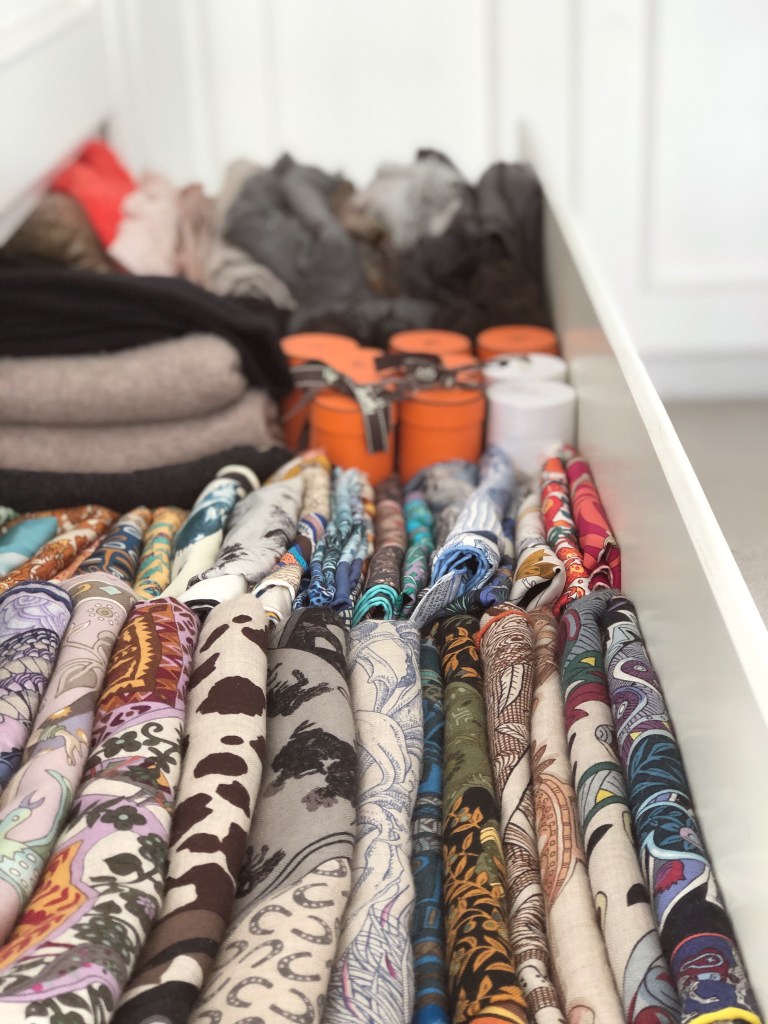
This is obvious, but it makes all the difference when you want to find that fabulous vintage YSL dress minutes before going out to dinner. Keep like items with like items: sunglasses together, dresses hang together, organised by colour because it’s prettier, and jeans don’t sit with the work trousers.
Tip Three – Everything in its place and shoes should never be piled
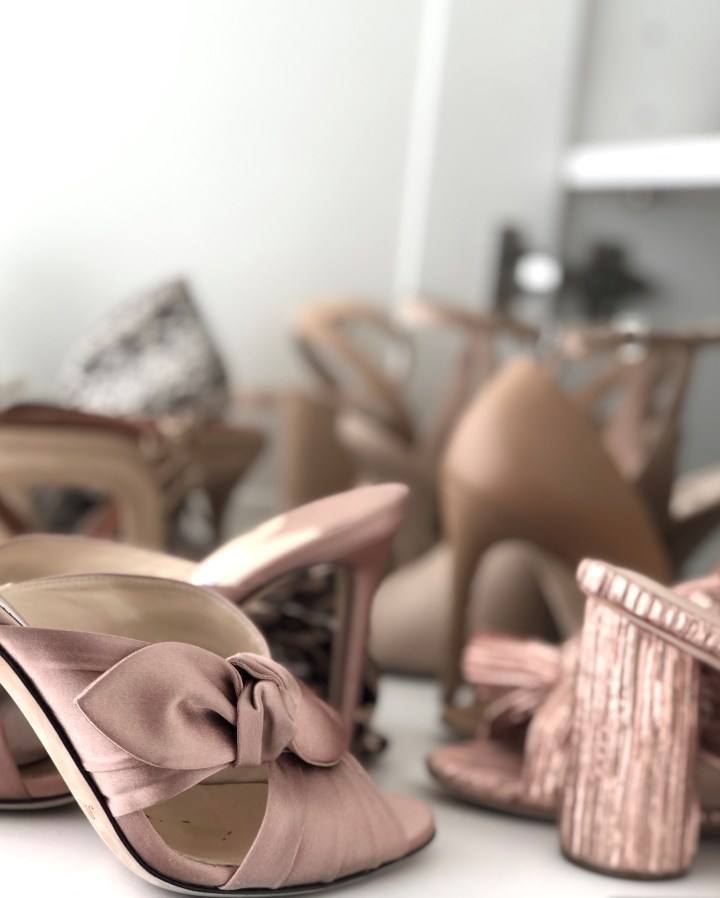
Remember: the reason clothes and accessories look beautiful in the shops is they are perfectly displayed in order to make us want them enough to spend sums that are commensurate to the GDP of small countries. So, if you want to keep wanting your pieces once they are in your home, you have to keep them in the best condition possible: : cashmere sweaters should be folded neatly, investment coats should go on padded hangers, and 5” heels should not be thrown in a pile on the floor, in fact never pile shoes, that’s the best way to destroy them. Instead store them neatly on a shelf where you can see them clearly.
I try to split my hanging space into three: one for dresses and jumpsuits, one for shirts and delicate tops, and one for blazers, trousers and skirts. They don’t need the same height so it makes sense to separate if you can. I hang everything facing the same direction, organised by colour, so it all looks neat and pretty, and it makes finding things super easy. Using coordinating hangers gives an added sense of neatness: I use grey velvet covered hangers that are skinny and pretty, and steer well away from heavy, bulky wooden ones (they are dreadful for any silky items).
Tip Four – Optimise space for accessories
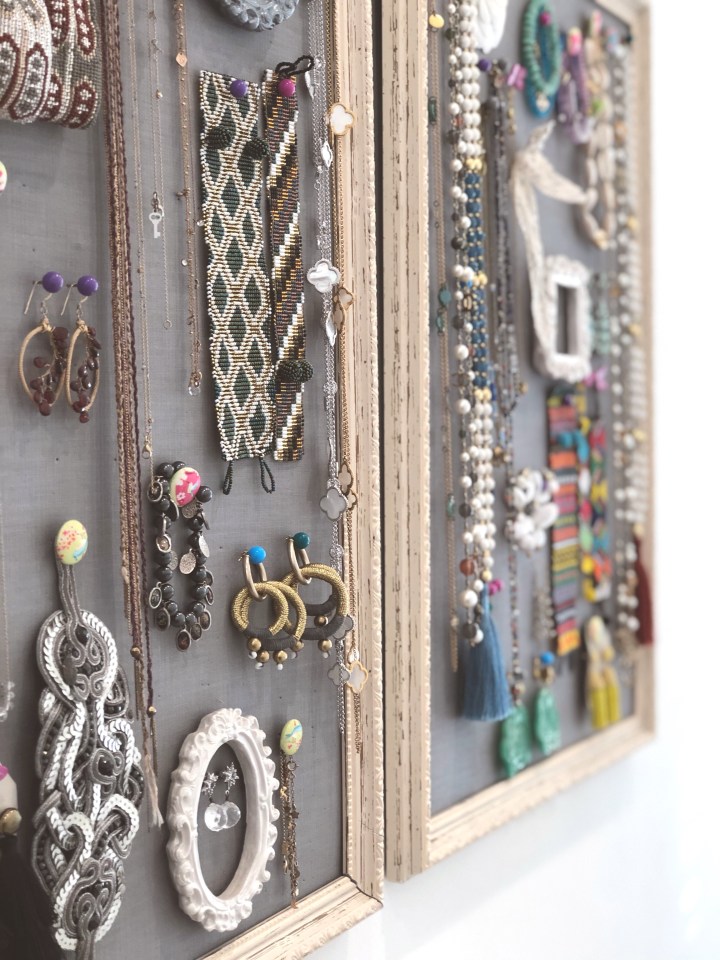
We’ve talked about the pull-out shelves for the shoes, the high shelves for the bags (always standing and with their dustbag and acid paper inside to keep their shape), but also consider empty wall space for costume jewellery. I use two moodboard frames to display some of my costume pieces opposite the closets, it’s pretty and practical. I place clutches in their cloth bags inside an organiser box, again it keeps everything standing and avoids damage.
Tip Five – Curate your wardrobe regularly and be ruthless
I regularly go through sections of my closet and sort through every single item, making three piles: keep, sell, give. Between our nanny and the multiple charities we have access to, it’s easy to give things that I don’t use. I sell everything that is still beautiful and in very good condition in my closet’s Instagram (if you’re curious, it’s Sandra’s Closet) or via a consignment service, which is another reason I try to take such good care of my things: some CSGMs sell for hundreds of dollars, not to mention designer handbags, but only if I’ve been really good about keeping them. By the way, I’m also not ashamed of buying preloved items: I have a few places that I like to visit from time to time to see if that grail of mine has popped up.
Whenever I do a de-clutter exercise, I automatically discard any piece that’s gone unworn for over twelve months (obviously this doesn’t apply to eveningwear). And finally, I follow the one in, one out rule: if I buy something new that has the exact same function or a similar look to something I own, the older version needs to go, it’s the only way to ensure that my wardrobe doesn’t explode… Curating and editing is part of learning about what looks work for me and which don’t, and thankfully I’m making far less mistakes now than fifteen years ago.

There you have them, my five tips to make sure I stay in control of my closet. Now, your turn: how do you curate your wardrobe to keep only your best, favourite looks?
With love, S.
 A Styled Life